Skin types, 2 min read
What’s Your Type?
A guide to matching skincare to your skin.
Published

Ever bought a highly recommended skincare product, only to have your skin react with breakouts or dry patches? You’re not alone. In skincare, there is no “one size fits all.” Finding the products that truly benefit you starts with understanding your skin type.
Our skin types are largely determined by genetics, but they can be influenced by our environment, hormones, and age. Here is how to find your type and how Haehani products are designed to support you.
The home test: the bare-face method
To find your skin type, wash your face with a gentle, neutral cleanser, pat it dry, and leave it completely bare for 30 minutes without applying any products.
- If it feels tight, flaky, or rough, you have dry skin.
- If it looks shiny, greasy, or has visible pores all over, you have oily skin.
- If your T-zone (forehead, nose, chin) is shiny but your cheeks are dry, you have combination skin.
- If it feels comfortable, neither tight nor greasy, you have normal skin.
- If it looks red, itchy, or feels like it’s stinging, you have sensitive skin.
Matching the science to your type
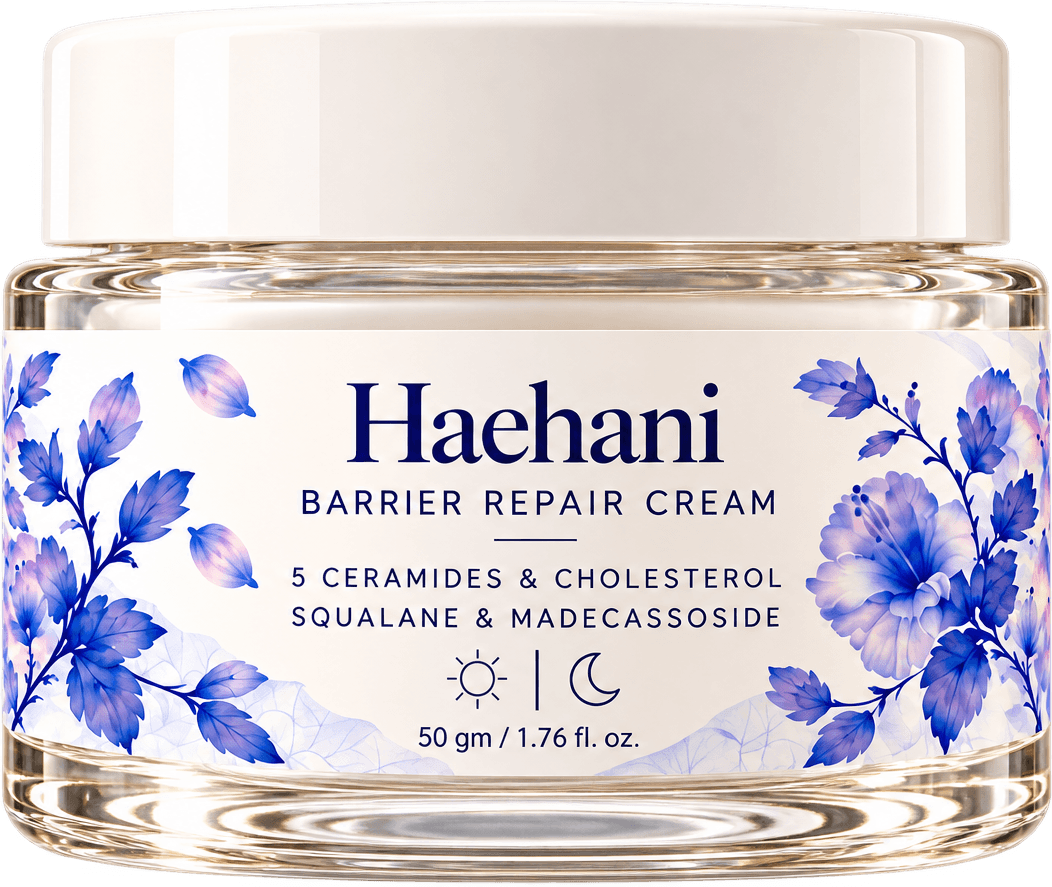
Dry skin needs: Your skin barrier produces less natural sebum, leaving it vulnerable to moisture loss. Match it with hydrating, barrier-repairing ingredients. If you struggle with ongoing dryness or flakiness, Barrier Repair Cream uses Panthenol to condition the skin, helping restore softness and hold moisture where you need it most.
Oily skin needs: Overactive sebaceous glands produce excess oil, which can lead to clogged pores and acne. Match it with lightweight, non-comedogenic (non-pore-clogging) formulas. Oily skin still needs hydration (why oily skin can be dehydrated); stripping it can actually trigger even more oil production. Opt for gel-based moisturizers and sebum-regulating actives like niacinamide.
Combination skin needs: A delicate balance between two opposing concerns. Match it with lightweight layering: focus hydrating, richer products on the cheeks and oil-balancing, lightweight formulas on the T-zone.
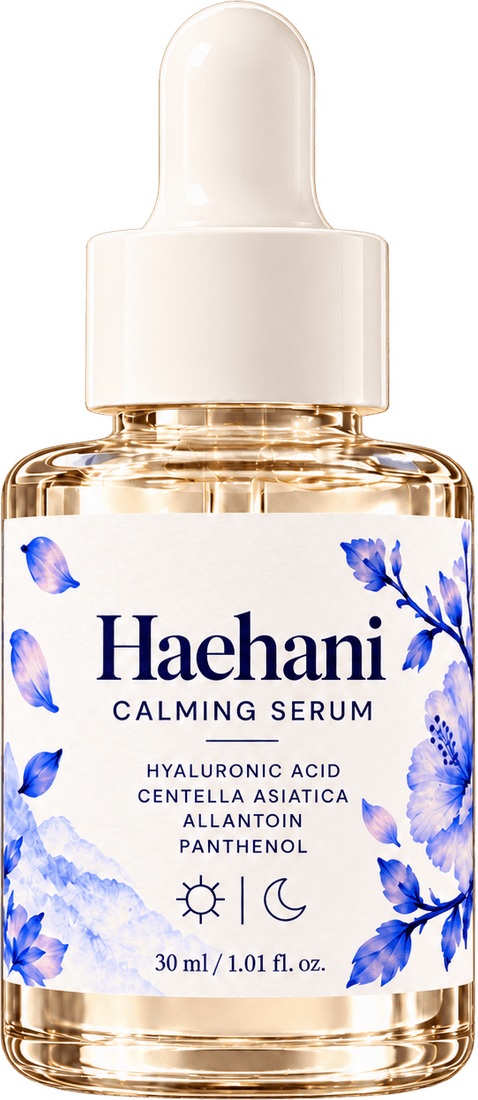
Sensitive skin needs: A compromised skin barrier reacts quickly to environmental triggers and harsh ingredients. Match it with gentle, highly soothing formulas designed to calm reactivity. Calming Serum is made with this in mind, pairing Centella Asiatica (Cica) and Panthenol to help soothe the look of redness and comfort stressed skin.
By understanding your skin’s unique personality, you can customize your regimen with products that work with your biology, not against it.
Sources
- 10 skin care secrets for healthier-looking skin. American Academy of Dermatology.
- The role of moisturizers in addressing various kinds of dermatitis: a review. Purnamawati S. et al., Clinical Medicine & Research, 2017.
Written for general information, not medical advice. For a skin condition, please see a dermatologist.
More from the journal
All articles
Seasonal care, 3 min read
Winter Skincare Routine for Dry Skin in India
Why skin turns tight and flaky when the weather cools, and a simple routine to keep it soft through an Indian winter.Read the article
Skin basics, 3 min read
Dehydrated vs Dry Skin: How to Tell the Difference
Dry skin lacks oil; dehydrated skin lacks water. How to tell which one you have, and why it changes what your skin needs.Read the article
Ingredients, 3 min read
Centella Asiatica (Cica) for Sensitive Skin: Benefits and Uses
Why Korean skincare loves centella, what it does for sensitive and stressed skin, and how to fit a cica serum into your routine.Read the article
Seasonal care, 3 min read
Moisturiser for Sensitive Skin in Summer: A Guide for Indian Heat
Why sensitive skin still needs a moisturiser in the heat, what to look for, and how to calm skin flushed by the sun.Read the article
K-beauty, 3 min read
Glass Skin for Indian Skin: What It Is and How to Get It
The dewy K-beauty look, explained honestly, with a simple routine for Indian weather and melanin-rich skin.Read the article
Ingredients, 3 min read
Ceramides Explained: What They Do for Your Skin
What ceramides are, why your skin barrier depends on them, and how to choose and use a ceramide moisturiser.Read the article
Routine guide, 3 min read
A Korean Skincare Routine for Indian Skin and Weather
What K-beauty gets right, adapted to Indian heat, humidity and pollution, for oily, dry and combination skin.Read the article
Skin barrier, 3 min read
Damaged Skin Barrier: The Signs and How to Repair It
What your skin barrier is, how to tell it’s struggling, and a simple routine to help it recover.Read the article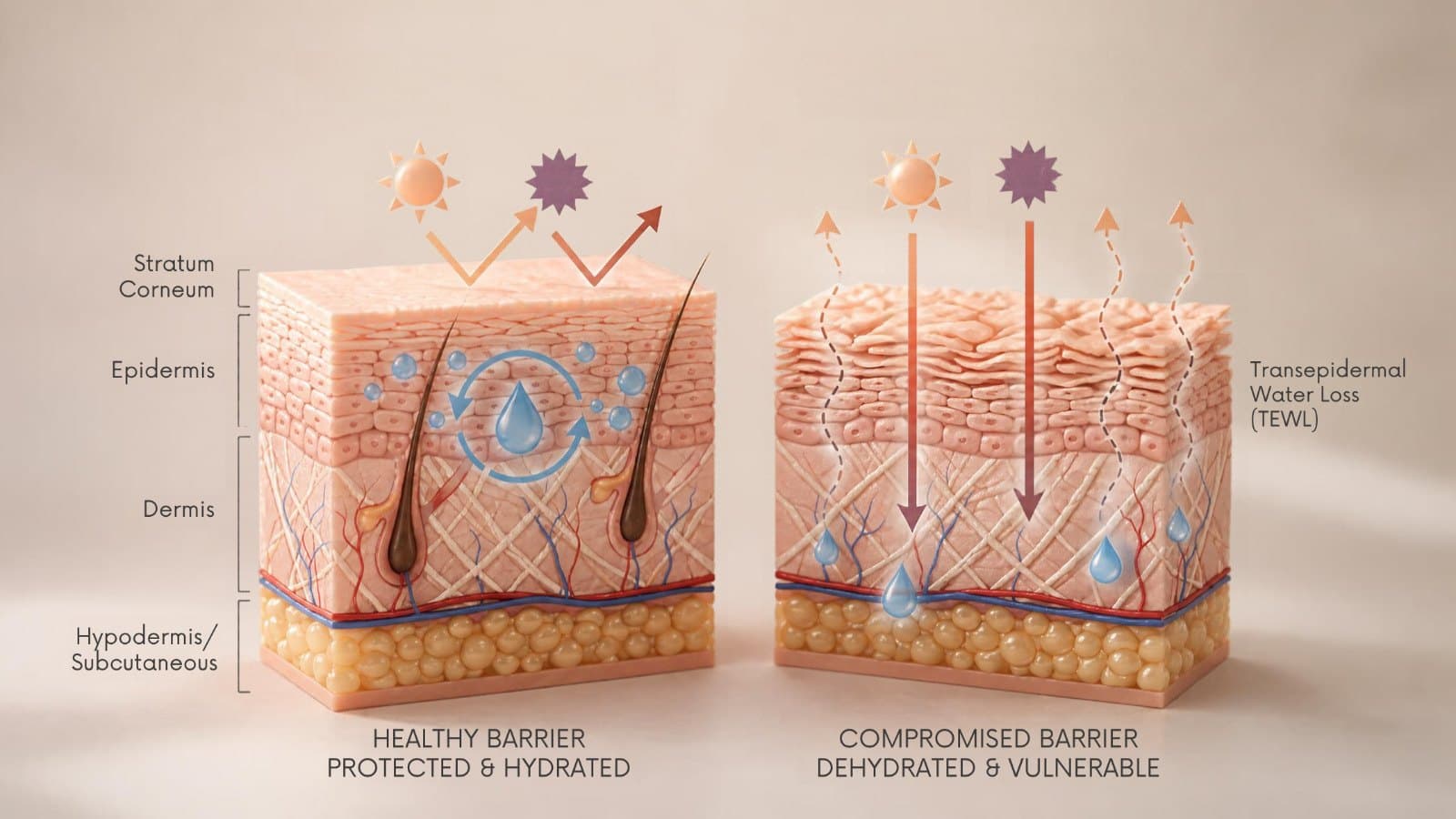
Routine guide, 4 min read
A Simple Daily Skincare Routine for Beginners
A science-backed guide to the few steps your skin actually needs.Read the article
How to, 2 min read
How to Get the Most Out of Your Skincare
Four simple rules that help every product in your routine do its work.Read the article
Ingredients, 2 min read
Understanding Your Skincare Labels
Demystifying what’s inside, from the INCI list to the tiny icons.Read the article