Routine guide, 4 min read
A Simple Daily Skincare Routine for Beginners
A science-backed guide to the few steps your skin actually needs.
Published , Updated
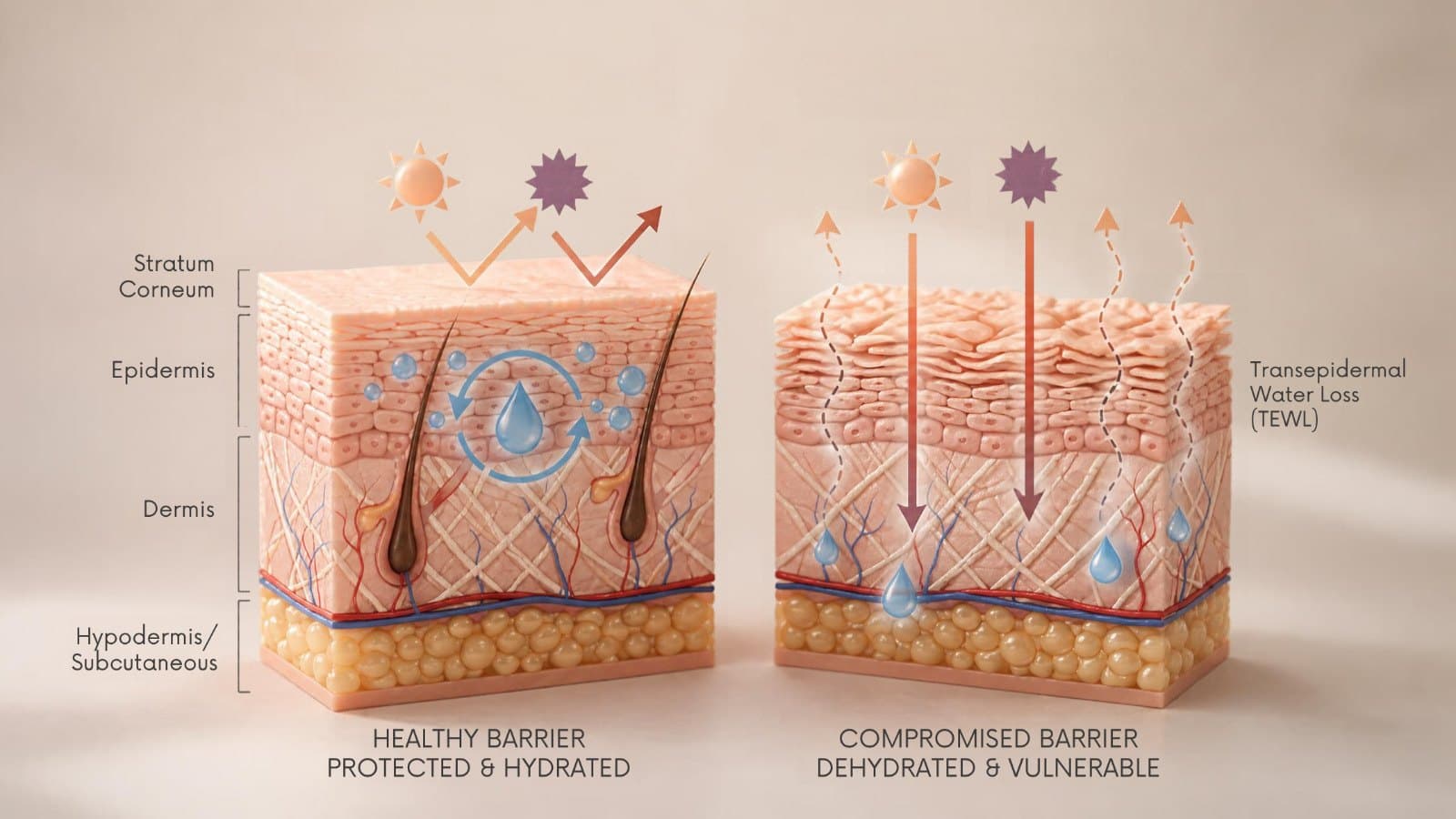
The beauty industry loves to introduce “must-have” 10-step skincare trends. However, ask any dermatologist, and they will tell you that the skin is a self-regulating organ that responds best to consistency, not complexity. Building an effective routine is less about overcrowding your bathroom shelf and more about understanding the fundamental biological needs of your skin.
At Haehani, we believe in a streamlined, daily ritual rooted in science. There are three non-negotiable pillars to any effective skincare routine: cleansing, hydrating, and protecting.
Step 1: Cleanse (morning and night)
The science: Throughout the day and night, your skin accumulates environmental pollutants, sebum, dead skin cells, and microscopic debris. Cleansing clears this buildup to prevent clogged pores and prepares the skin to absorb what comes next. It matters even more where air pollution is high and temperatures swing sharply, and when you wear makeup or sunscreen.
The approach: Always use a gentle, pH-balanced cleanser. Stripping the skin with harsh, foaming agents can disrupt your natural acid mantle (which sits at an optimal pH of about 5.5), leaving you prone to irritation and breakouts.
Step 2: Treat (morning or night)
The science: This is where you address specific concerns, like dullness, fine lines, or congestion, using concentrated serums.
The approach: Apply your actives directly after cleansing.
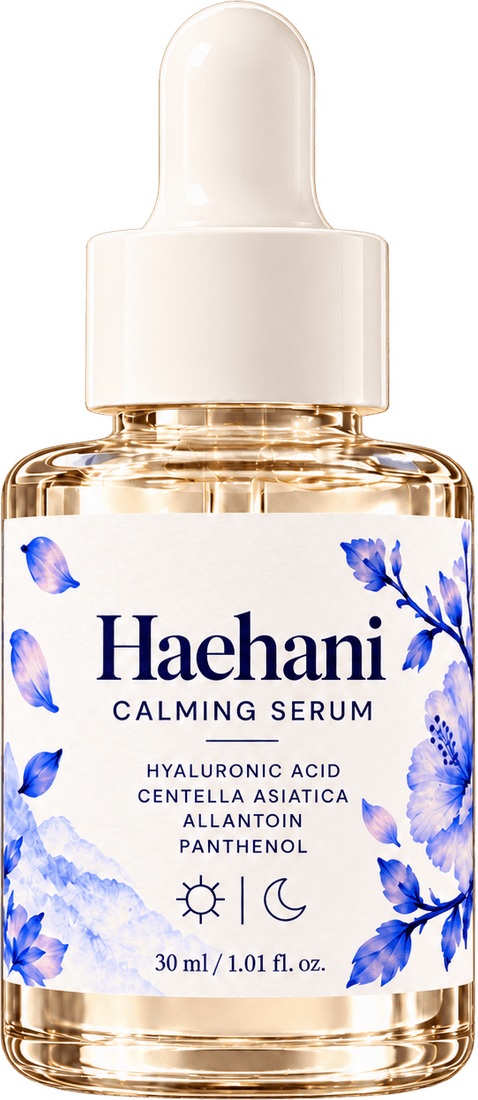
- In the morning: Reach for antioxidants like Vitamin C, which help neutralize free radicals caused by daily UV exposure and pollution. For a daily dose of hydration and calm, reach for Calming Serum. Made with a soothing blend of Centella Asiatica, multiple weights of Hyaluronic Acid, and Panthenol, it helps comfort skin stressed by its environment, soothes the look of redness, and leaves skin looking plumper.
- In the evening: Opt for regenerative ingredients, such as retinoids or exfoliating acids (AHAs/BHAs), to support cellular turnover while your body is in its natural nighttime repair mode.
Step 3: Hydrate and moisturize (morning and night)
The science: Your skin barrier relies on lipids and hydration to keep moisture locked in and irritants locked out. Daily environmental stressors can cause “transepidermal water loss” (TEWL), which dehydrates the skin.
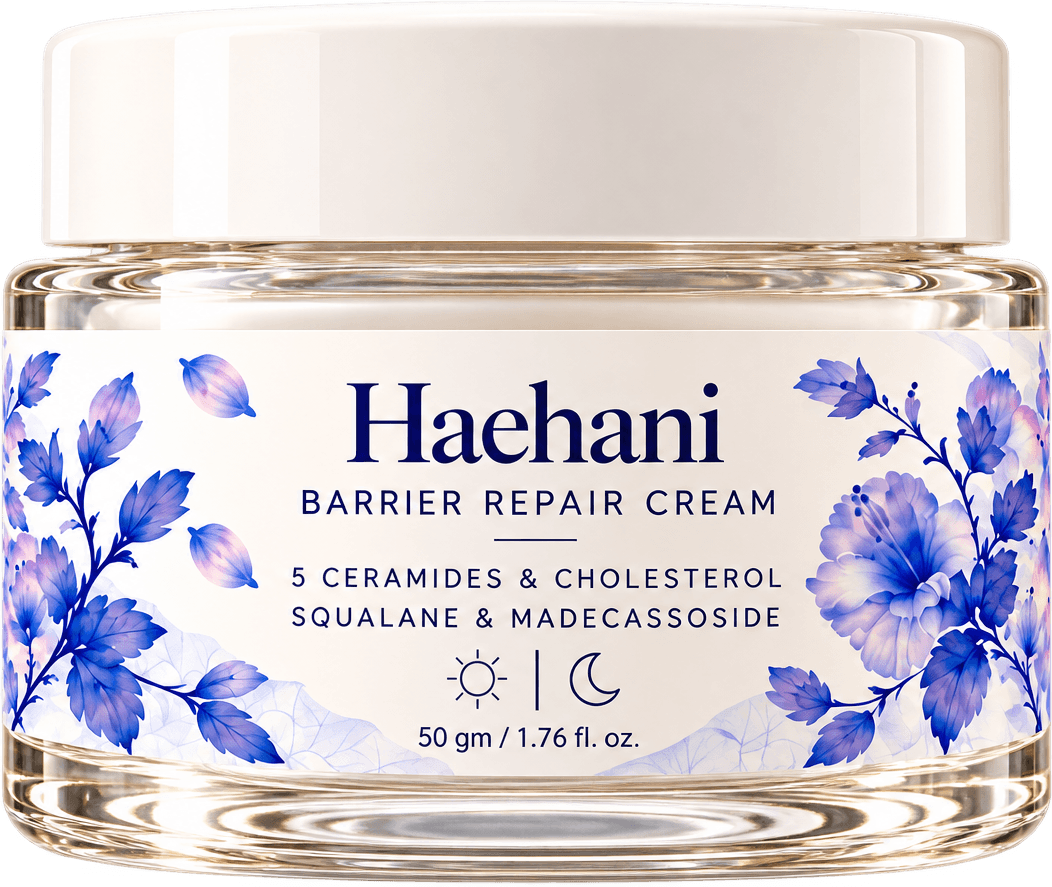
The approach: A good moisturizer is essential, even for oily skin types. It acts as a sealing blanket, locking in your serums and strengthening the barrier with ingredients like ceramides, glycerin, or hyaluronic acid. To support your skin’s natural defenses, lock in your serum with Barrier Repair Cream. With Panthenol (Pro-Vitamin B5), five ceramides, and squalane, it forms a breathable, comforting seal that helps a stressed barrier recover and helps reduce transepidermal water loss.
Step 4: Protect (morning only)
The science: UV exposure is one of the biggest causes of visible skin aging. Even on cloudy days, UVA rays pass through clouds and windows, breaking down collagen and elastin.
The approach: Apply a broad-spectrum SPF 30+ every single morning. It’s the single most important step for maintaining long-term skin health. Sunscreen is still catching on in India, yet UV levels here are high, so making it a daily habit is one of the best things you can do for your skin.
Short on time? The 2-step routine
If four steps feel like a lot, start with two after cleansing: a hydrating serum, then a moisturiser. Press two or three drops of Calming Serum into damp skin, then seal it in with Barrier Repair Cream. That covers hydration and barrier care, the two things every skin type needs. Add sunscreen in the morning as soon as it becomes a habit.
Your routine at a glance
- Morning: gentle cleanse, Calming Serum, Barrier Repair Cream, sunscreen
- Night: gentle cleanse (twice if you wore sunscreen or makeup), Calming Serum, Barrier Repair Cream
- Later, if you want: one active at a time, such as vitamin C in the morning or retinol at night, a few nights a week to start
Adjusting it for Indian weather
- Humid summers: a thin layer of moisturiser, and gel or fluid sunscreen (summer guide)
- Monsoon: keep the routine light and cleanse gently at night to clear sweat
- Dry winters and AC: a more generous layer of moisturiser, especially at night (winter routine)
Beginner mistakes to avoid
- Too much at once: start with the basics and add one new product at a time
- Switching too fast: give each product about four weeks before judging it
- Skipping moisturiser on oily skin: skin short of water can make more oil
- Skipping sunscreen: it protects every other step you take
- Not patch-testing: try anything new on your jawline for a few days first
Sources
- 10 skin care secrets for healthier-looking skin. American Academy of Dermatology.
- Face washing 101. American Academy of Dermatology.
- How to select a sunscreen. American Academy of Dermatology.
Written for general information, not medical advice. For a skin condition, please see a dermatologist.
More from the journal
All articles
Seasonal care, 3 min read
Winter Skincare Routine for Dry Skin in India
Why skin turns tight and flaky when the weather cools, and a simple routine to keep it soft through an Indian winter.Read the article
Skin basics, 3 min read
Dehydrated vs Dry Skin: How to Tell the Difference
Dry skin lacks oil; dehydrated skin lacks water. How to tell which one you have, and why it changes what your skin needs.Read the article
Ingredients, 3 min read
Centella Asiatica (Cica) for Sensitive Skin: Benefits and Uses
Why Korean skincare loves centella, what it does for sensitive and stressed skin, and how to fit a cica serum into your routine.Read the article
Seasonal care, 3 min read
Moisturiser for Sensitive Skin in Summer: A Guide for Indian Heat
Why sensitive skin still needs a moisturiser in the heat, what to look for, and how to calm skin flushed by the sun.Read the article
K-beauty, 3 min read
Glass Skin for Indian Skin: What It Is and How to Get It
The dewy K-beauty look, explained honestly, with a simple routine for Indian weather and melanin-rich skin.Read the article
Ingredients, 3 min read
Ceramides Explained: What They Do for Your Skin
What ceramides are, why your skin barrier depends on them, and how to choose and use a ceramide moisturiser.Read the article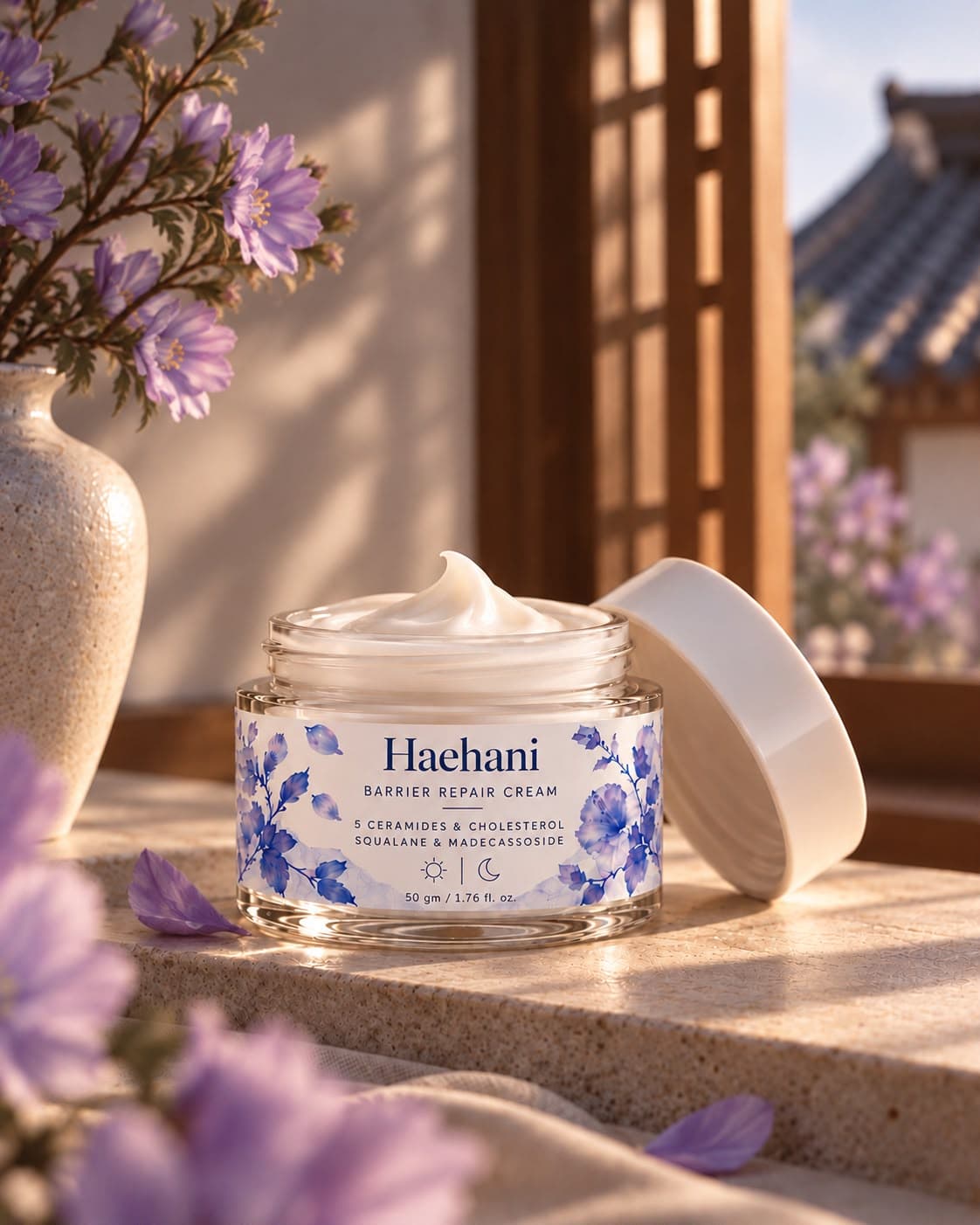
Routine guide, 3 min read
A Korean Skincare Routine for Indian Skin and Weather
What K-beauty gets right, adapted to Indian heat, humidity and pollution, for oily, dry and combination skin.Read the article
Skin barrier, 3 min read
Damaged Skin Barrier: The Signs and How to Repair It
What your skin barrier is, how to tell it’s struggling, and a simple routine to help it recover.Read the article
Skin types, 2 min read
What’s Your Type?
A guide to matching skincare to your skin.Read the article
How to, 2 min read
How to Get the Most Out of Your Skincare
Four simple rules that help every product in your routine do its work.Read the article
Ingredients, 2 min read
Understanding Your Skincare Labels
Demystifying what’s inside, from the INCI list to the tiny icons.Read the article